
VITILIGO CARE
Advanced Vitiligo Treatment in Pune
From newly developing white patches to long-standing stable vitiligo, Averah provides personalised care based on the type, activity, location and extent of pigment loss.
06
Vitiligo Treatments
1:1
Treatment Plans
360°
Pigment
Assessment
04
Care
Approach
THE APPROACH
Understand the vitiligo. Plan the care.
Effective vitiligo care begins with identifying where pigment is being lost, whether patches are spreading and how the condition is behaving before choosing treatment. AAD notes that age, health, vitiligo type, location and whether it is spreading all influence treatment planning.
01
ASSESS THE PATCHES
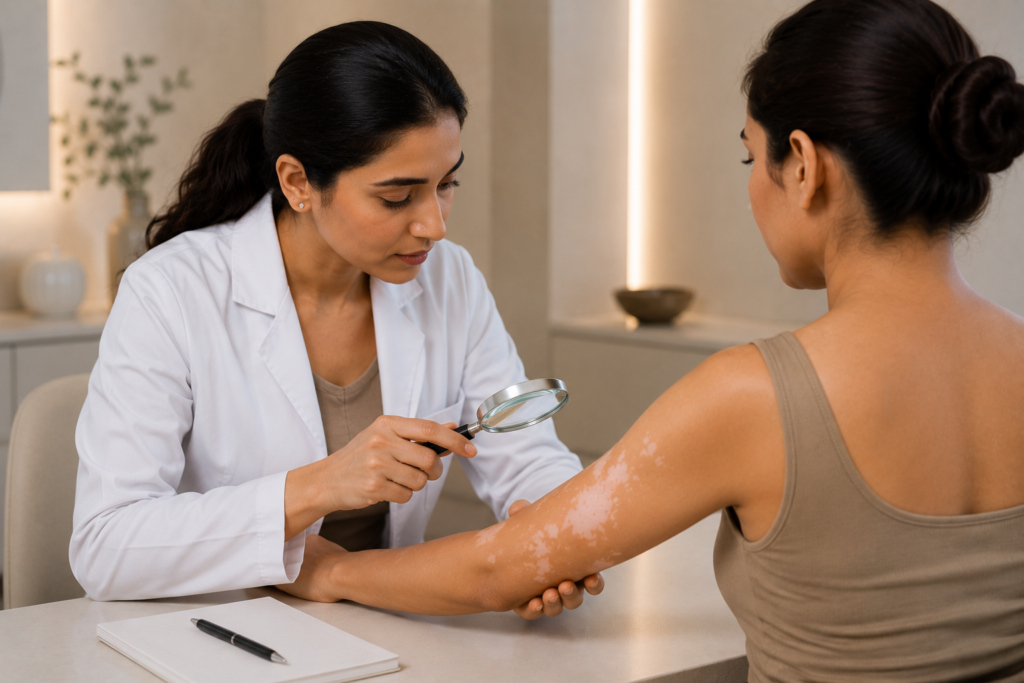
We evaluate the distribution, extent and characteristics of pigment loss along with your medical history.
02
CHECK THE ACTIVITY
Understanding whether patches are new, spreading or stable helps guide medical, light-based or surgical treatment decisions.
03
PLAN YOUR CARE
Treatment is personalised around your vitiligo pattern, treatment goals and response over time.
TYPES & CONCERNS
What would you like help with?
Vitiligo does not behave the same way in every person. The location, activity and duration of patches can influence treatment response.
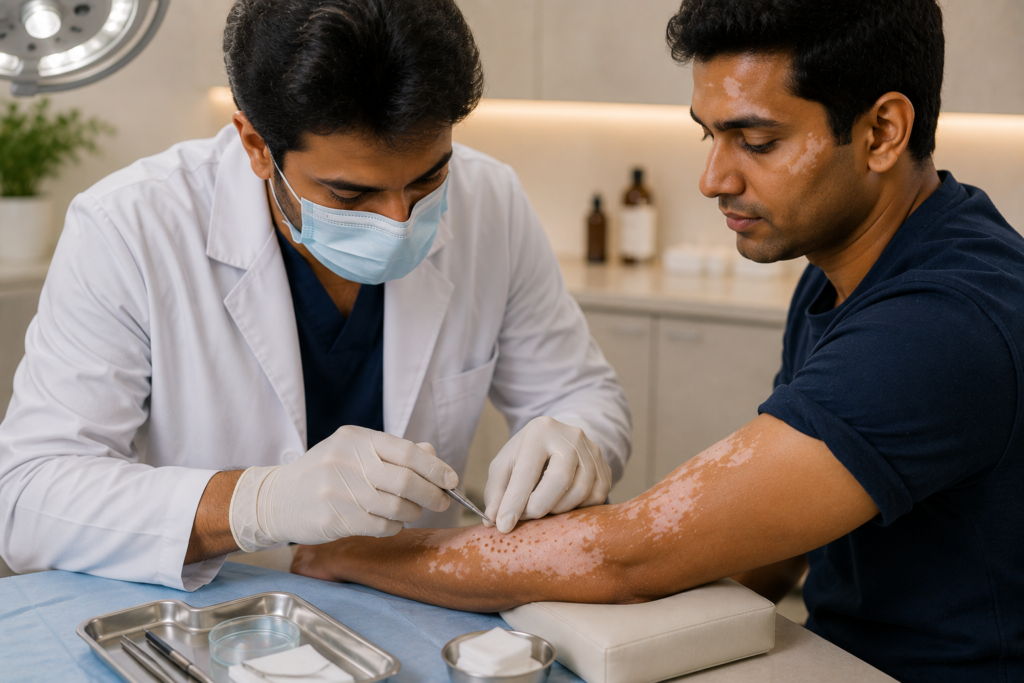
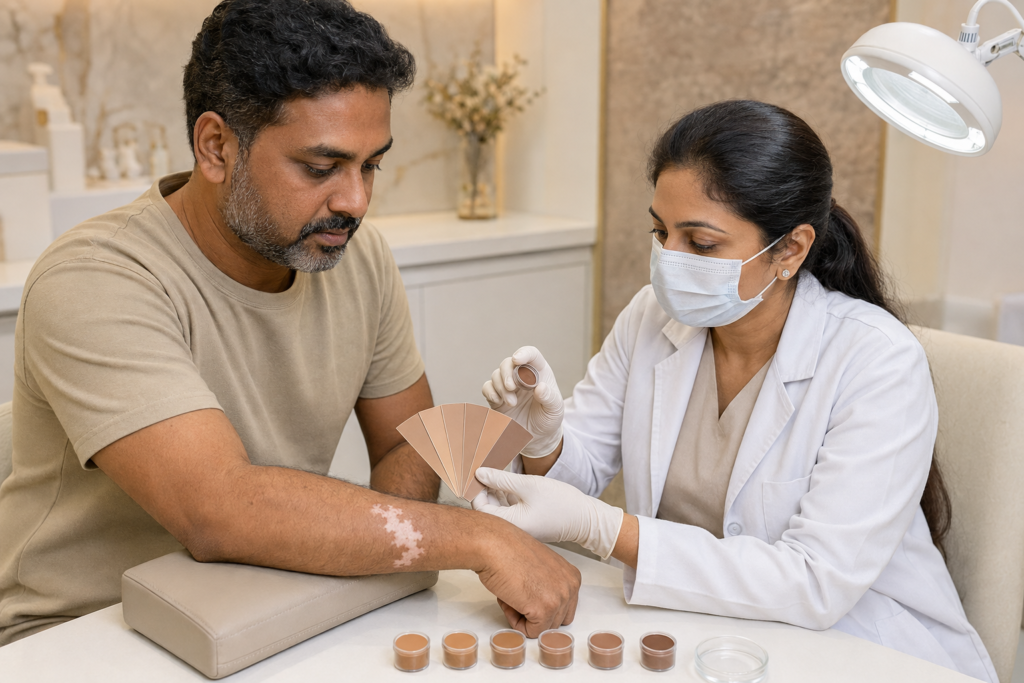
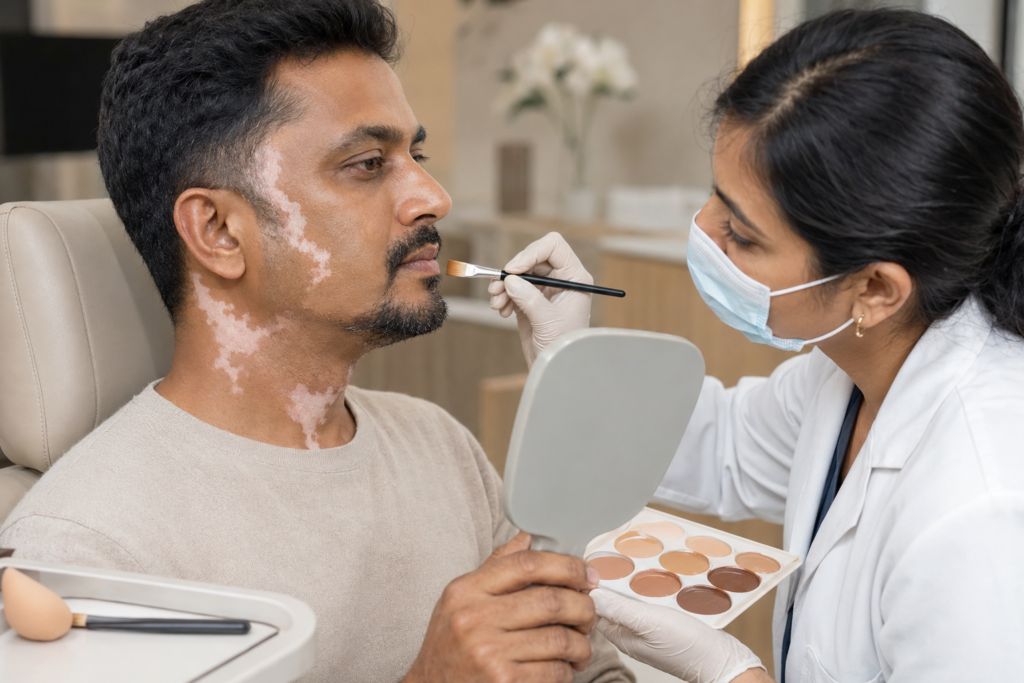

UNDERSTANDING VITILIGO
What the evidence
supports.
Vitiligo is an autoimmune condition in which pigment-producing cells called melanocytes are attacked and destroyed, causing areas of skin to lose colour. It is not contagious.
Treatment has more than one goal.
Dermatologists may aim to restore lost colour, slow enlargement of existing patches and reduce the development of new areas. There is no single best treatment for everyone.
Location and activity matter.
Some areas respond better than others. AAD notes that the face and neck tend to respond better to light-based treatment than areas such as the fingertips, toes and lips.
Treatment takes time.
Repigmentation develops gradually, and current treatments cannot guarantee a permanent cure. Maintenance may sometimes be required after improvement.
THE TREATMENT MENU
The vitiligo care menu.
A personalised range of medical, light-based, procedural and camouflage options selected according to vitiligo activity, location and individual suitability.
Comprehensive Vitiligo Care
Planned around your condition.
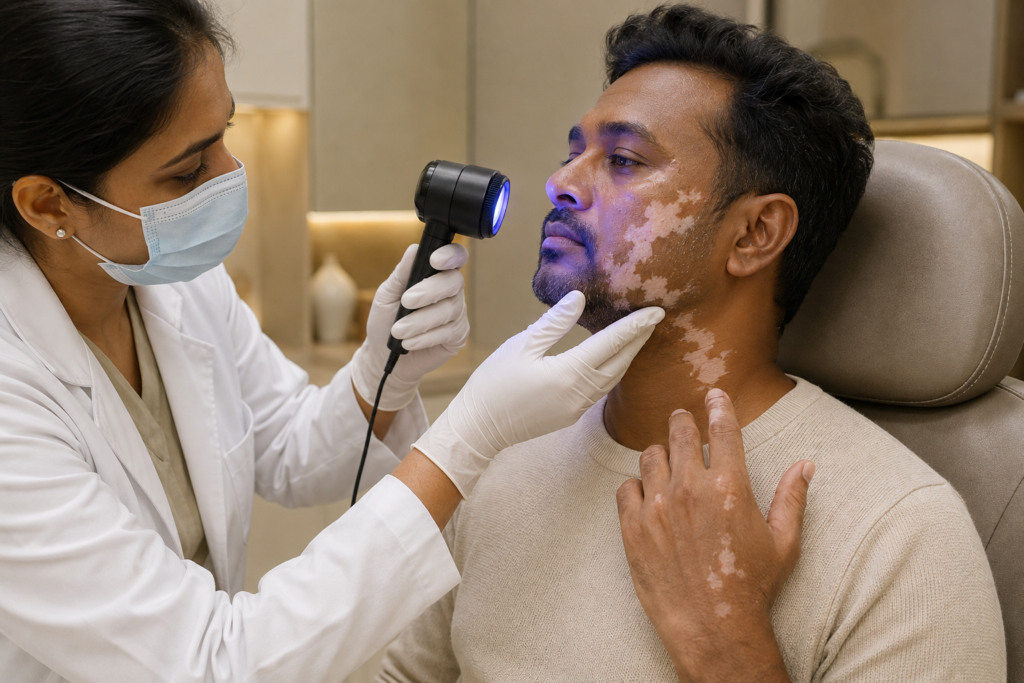
Wood’s Lamp Assessment
Specialised ultraviolet examination helps identify depigmented areas more clearly and supports accurate assessment of vitiligo patterns.
Narrowband UVB Phototherapy
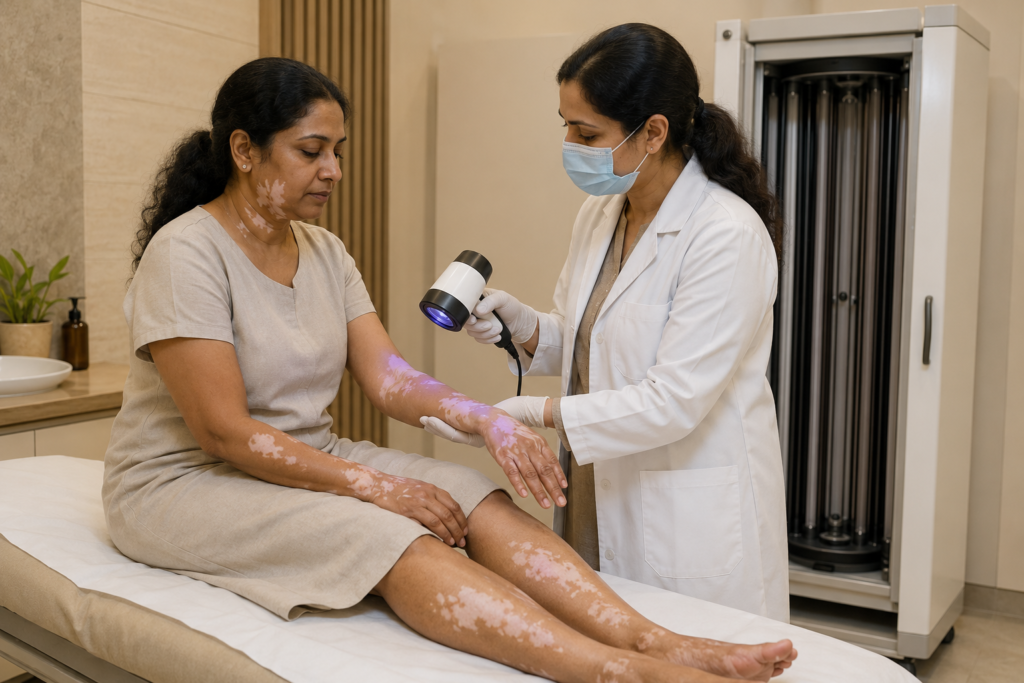
Controlled NB-UVB light therapy is widely used to support repigmentation and manage suitable areas affected by vitiligo.
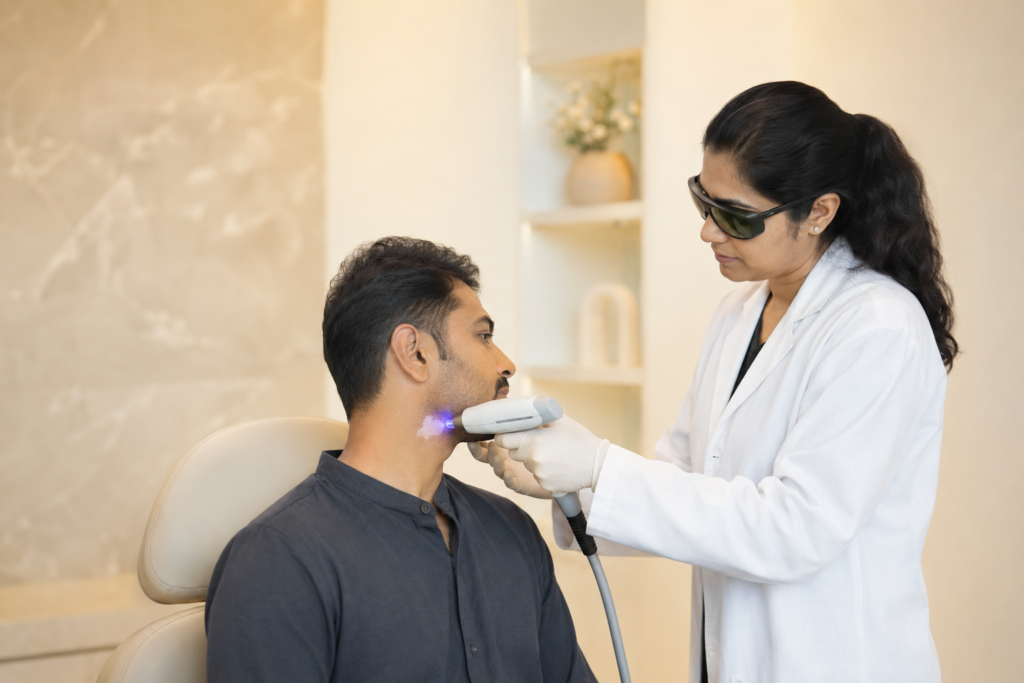
308 nm Excimer Laser
Targeted light technology delivers focused treatment to localised vitiligo patches while limiting exposure to surrounding unaffected skin.
Digital Vitiligo Mapping
Standardised imaging and documentation help monitor affected areas, track changes and evaluate treatment progress over time.
Melanocyte Transplantation
For carefully selected stable vitiligo cases, pigment-producing cells can be transferred to depigmented areas to support repigmentation.
Advanced Skin Grafting Techniques
Specialised grafting procedures may be considered for stable vitiligo when appropriate, particularly when other treatments provide limited response.
THE CLINICIANS
Dermatologist-led, every step.
Vitiligo care begins with accurate diagnosis and careful assessment of pigment loss, disease activity and medical history before treatment is selected.
Dr. Hassan Hamdan
GENERAL PRACTITIONER
Dr. Hassan Hamdan is a multilingual General Practitioner specialising in regenerative medicine and advanced cellular-based therapies.
Dr. Hassan Hamdan
GENERAL PRACTITIONER
Dr. Hassan Hamdan is a multilingual General Practitioner specialising in regenerative medicine and advanced cellular-based therapies.
Dr. Hassan Hamdan
GENERAL PRACTITIONER
Dr. Hassan Hamdan is a multilingual General Practitioner specialising in regenerative medicine and advanced cellular-based therapies.
THE QUESTIONS
Good to know.
Vitiligo is a chronic autoimmune condition in which melanocytes—the cells responsible for producing skin pigment—are damaged or destroyed, creating lighter or white patches.
No. Vitiligo cannot be caught from or passed to another person.
Yes. The behaviour varies between patients. Some people experience gradual spread, while others can develop new patches more quickly.
There is currently no guaranteed cure. Treatment can help restore pigment and control progression in some patients, but repigmentation can fade over time.
Dermatologists assess the appearance and distribution of patches and may examine the skin using specialised lighting such as a Wood’s lamp.
Phototherapy is an established option that exposes affected skin to controlled ultraviolet light to encourage repigmentation. Multiple sessions are generally needed.
Surgical techniques such as skin grafting or cell transplantation may be considered for selected patients, particularly when vitiligo has remained stable. Active or recently spreading vitiligo is generally not suitable for surgery.
Yes. Several vitiligo treatments are used in children, but treatment planning should consider the child’s age, spreading pattern and medical history.
No. Some people choose medical treatment, while others prefer camouflage or no treatment. The decision depends on the individual and how they wish to manage the condition.
Pigmentation And Aesthetic Care
Personalised dermatology care for dark spots, uneven skin tone, melasma and other pigmentation concerns.
Laser Treatments
Advanced laser and light-based treatments for selected pigmentation, scars, hair and skin concerns.
Start with your facial proportions.
Understand your jawline, chin, cheeks, lips and overall profile before deciding which contouring treatment is right for you.